
Sustainable Design x Electrolux
#UX Research #Figma #Quantitative Data #Material Research
During a semester-long partnership with Electrolux, the Swedish multinational home appliance manufacturer, I worked alongside a cross-functional team to explore avenues for enhancing refrigerator sustainability. Our focus was on understanding and influencing customer behaviors and examining sustainable materials.
Timeline
Aug - Dec 2022 (3 months)
Type
Academic Internship
My Role
Quantitive Research, UX Design, Client Liaison
Tools
Google Suite, Figma, Adobe Suite, Zoom, Qualtrics
Team
Barry Waddilove (Head of Design), Renee Paris (Sustainability Manager), Jan Veicht (Product Manager), Stella Disselkamp (Customer Research), Ming Xian Toh (Material Research)
My Contribution
Quantitive Research: I crafted and executed a detailed customer survey via Qualtrics to collect essential quantitative data
UX Design: I utilized survey results to conceptualize and prototype a sustainable refrigerator design in Figma, focusing on user experience and environmental friendliness
Client Liaison: I acted as the primary point of contact for Electrolux, leading weekly meetings and handling email communications to ensure project alignment and success
Introduction
Partnership with Electrolux
This semester-long academic partnership with Electrolux gave our cross-functional team a unique opportunity to tackle refrigerator sustainability at scale. Electrolux, a global home appliance manufacturer, is committed to reducing the environmental footprint of its products. Our team explored two angles: sustainable materials as alternatives to plastic, and ways to empower customers to make more eco-conscious purchasing decisions.
Problem
Enormous Plastic Waste
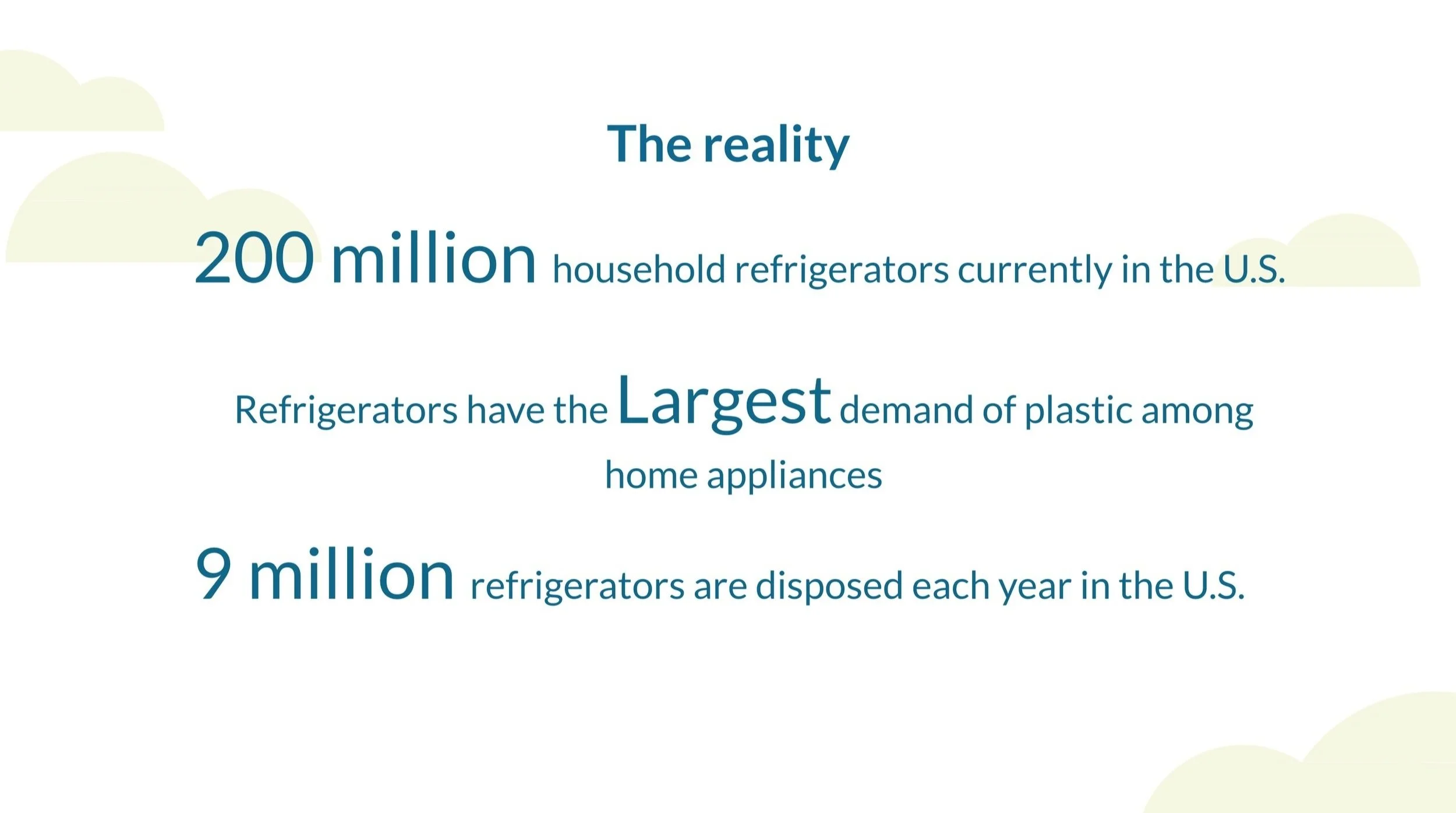
Electrolux is committed to environmental protection and reducing the carbon footprint of its products. Refrigerators, ubiquitous in households, contribute significantly to plastic waste, posing a substantial challenge due to their size, complex disposal process, and hazardous materials. Consequently, Electrolux approached us to identify the most effective strategies for minimizing plastic usage, considering both material selection and consumer behavior.
Research
Expert Interviews on Sustainable Materials
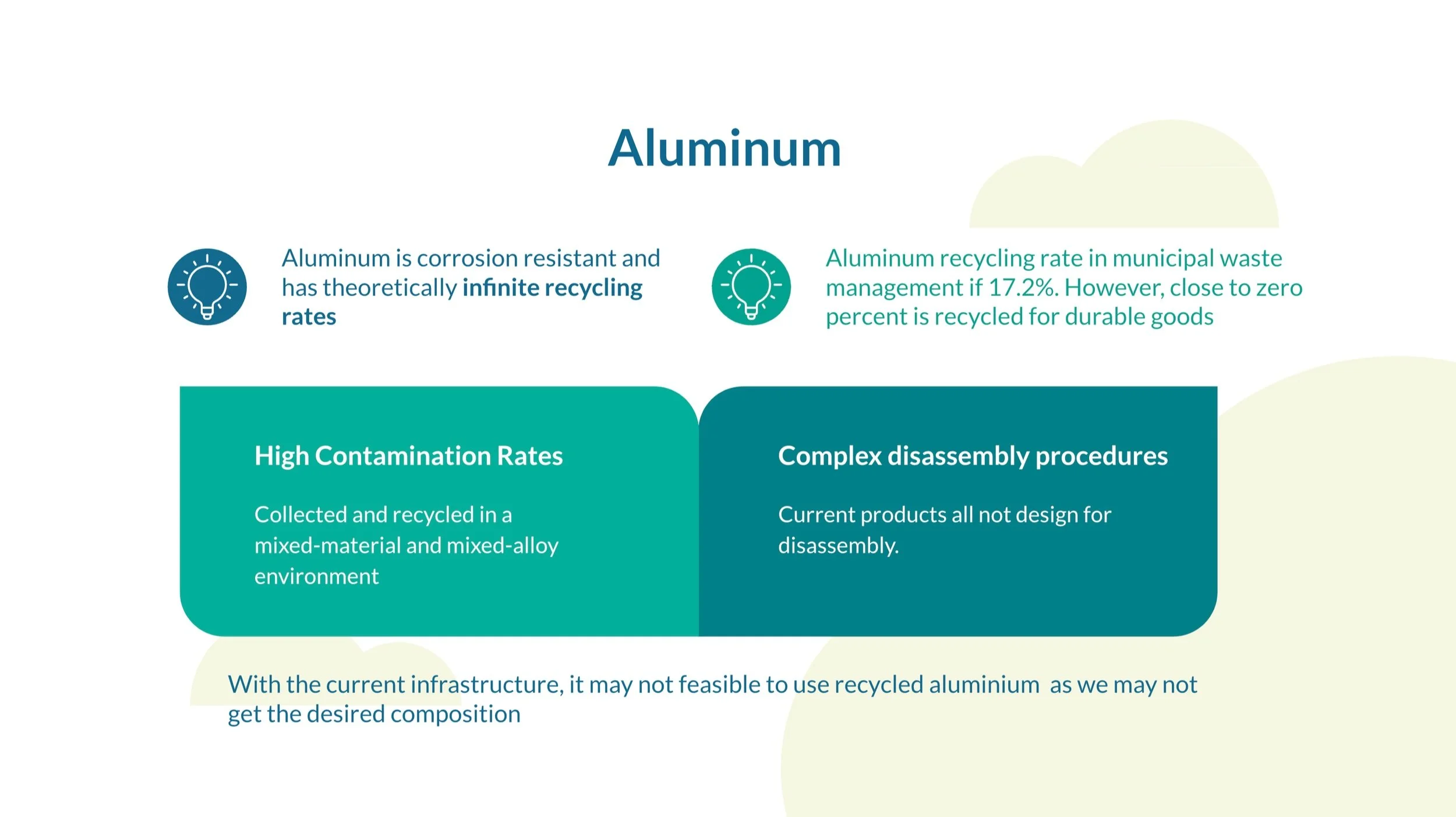
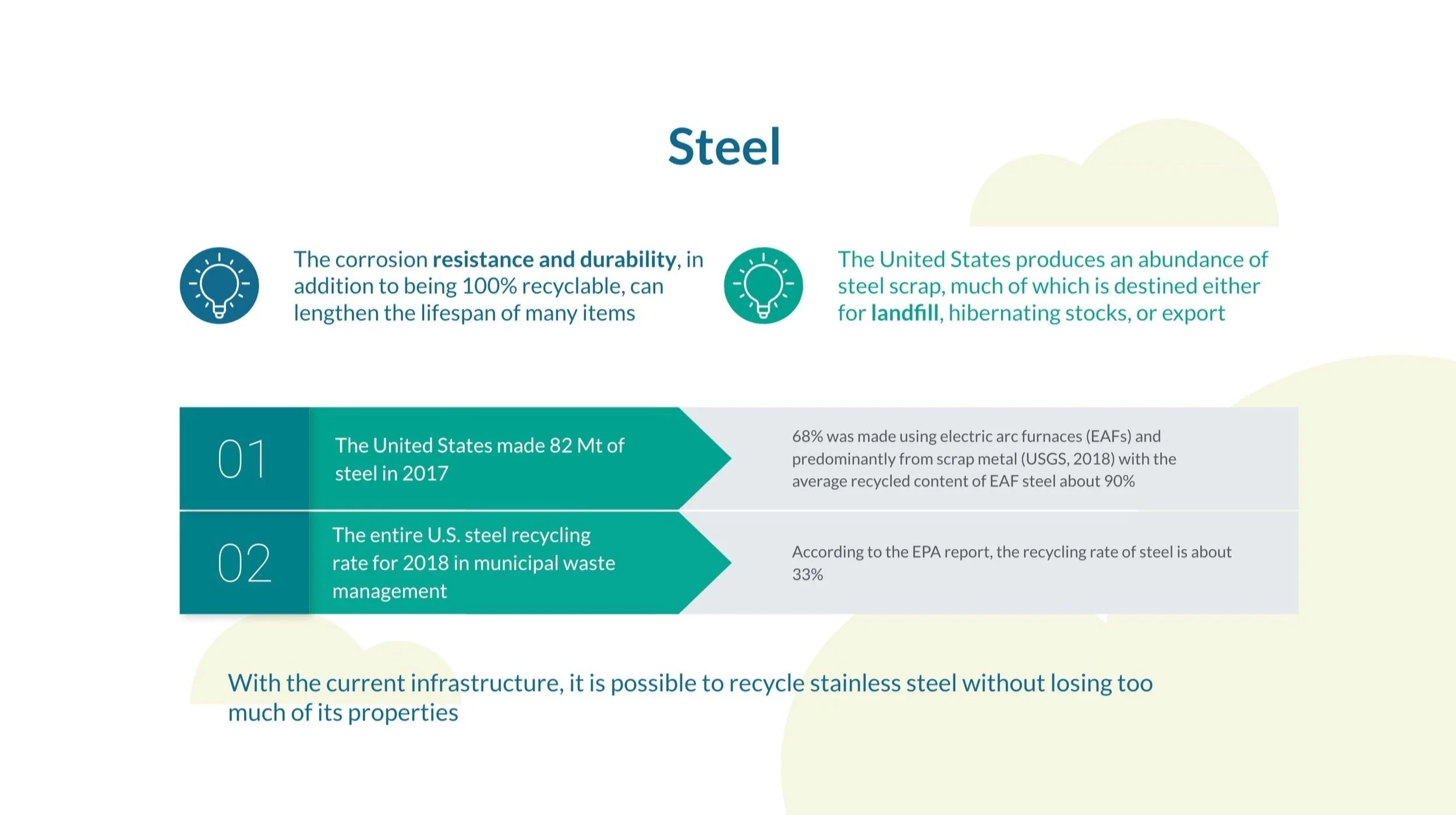
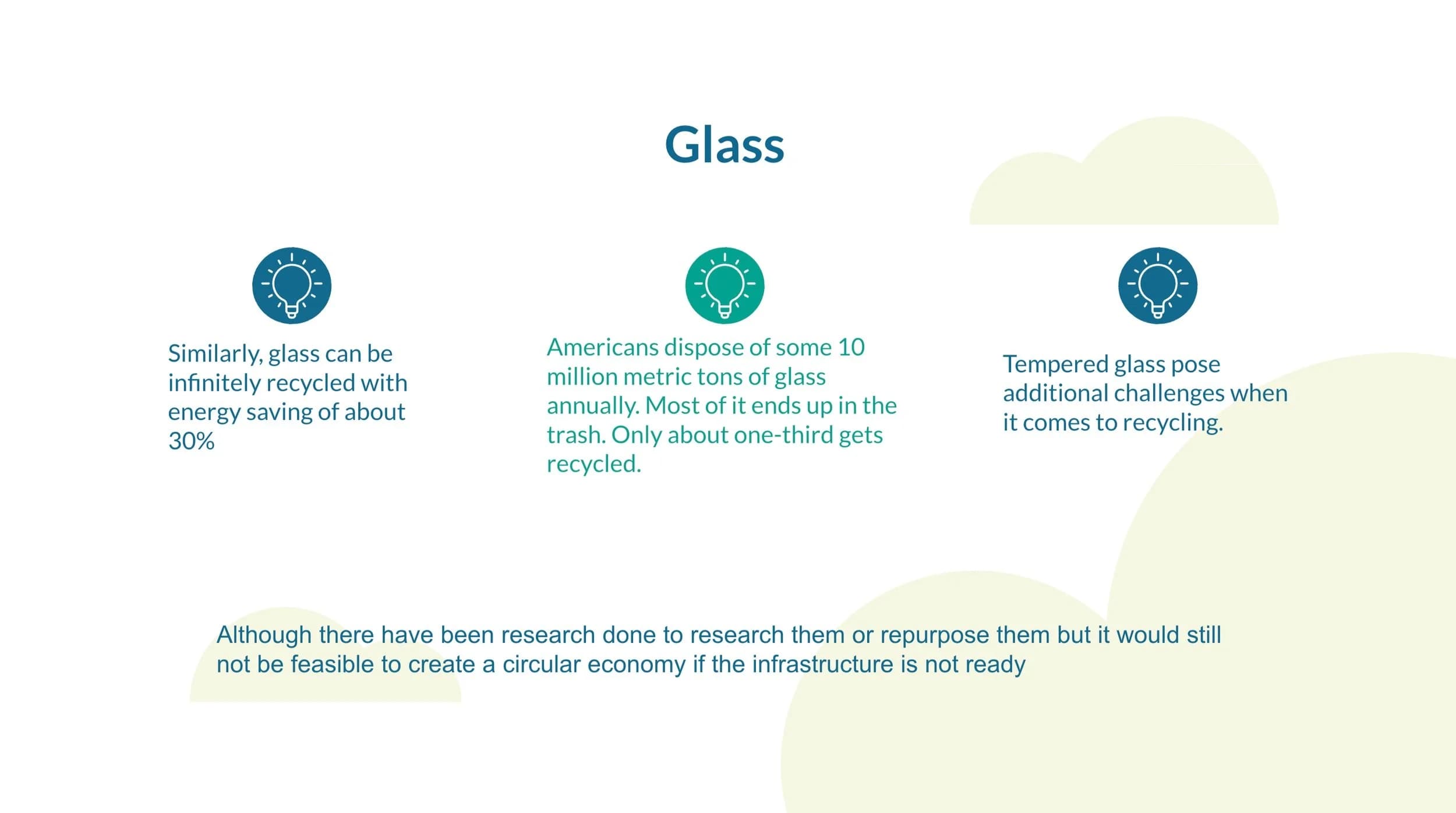
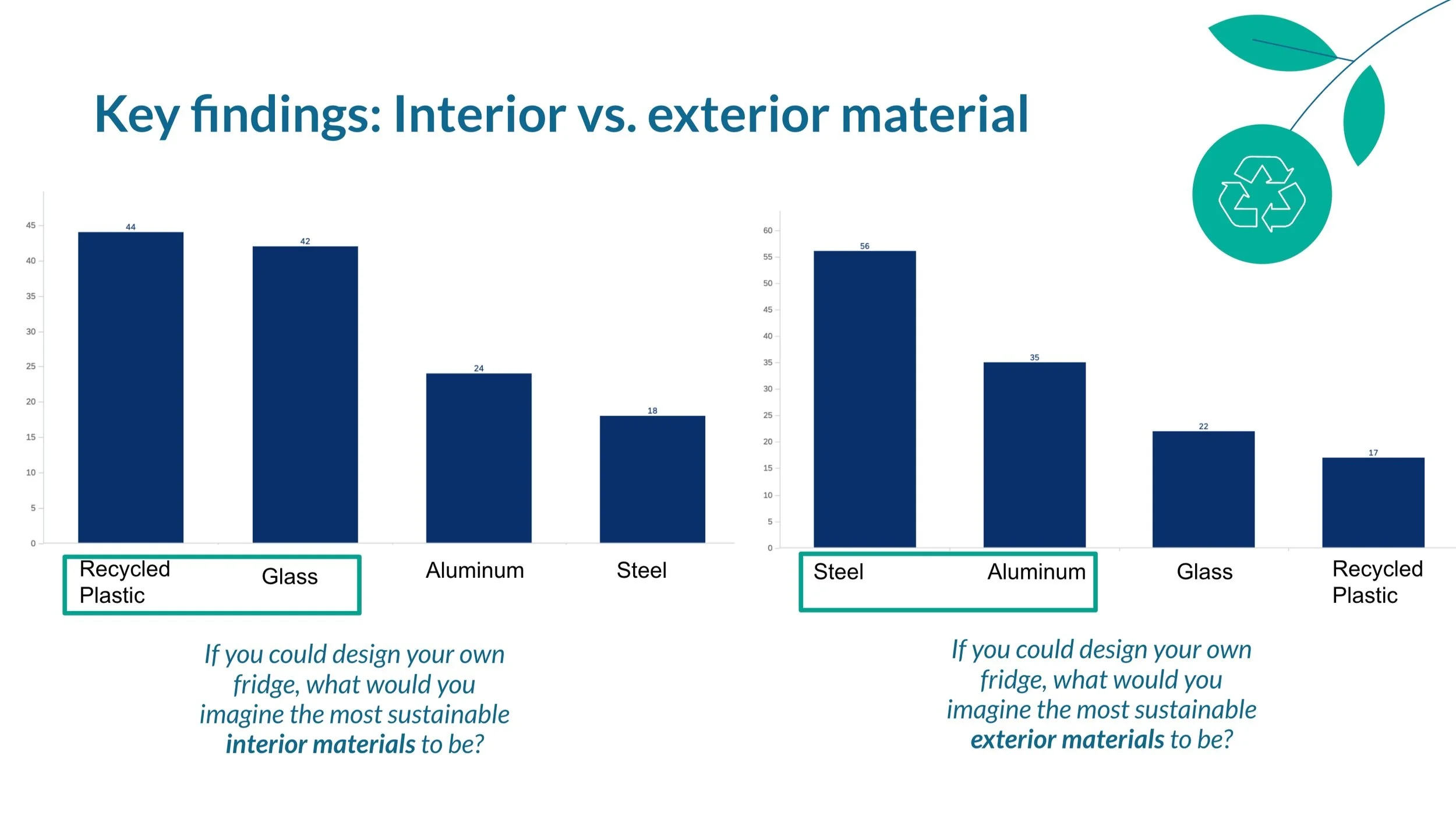
In the initial phase of our research, we concentrated on evaluating the sustainability of various materials used in refrigerator construction. To mitigate plastic waste, we explored the feasibility of substituting plastic with more eco-friendly alternatives such as aluminum, steel, or glass. We conducted expert interviews with recycling professionals, partnering with Recology.
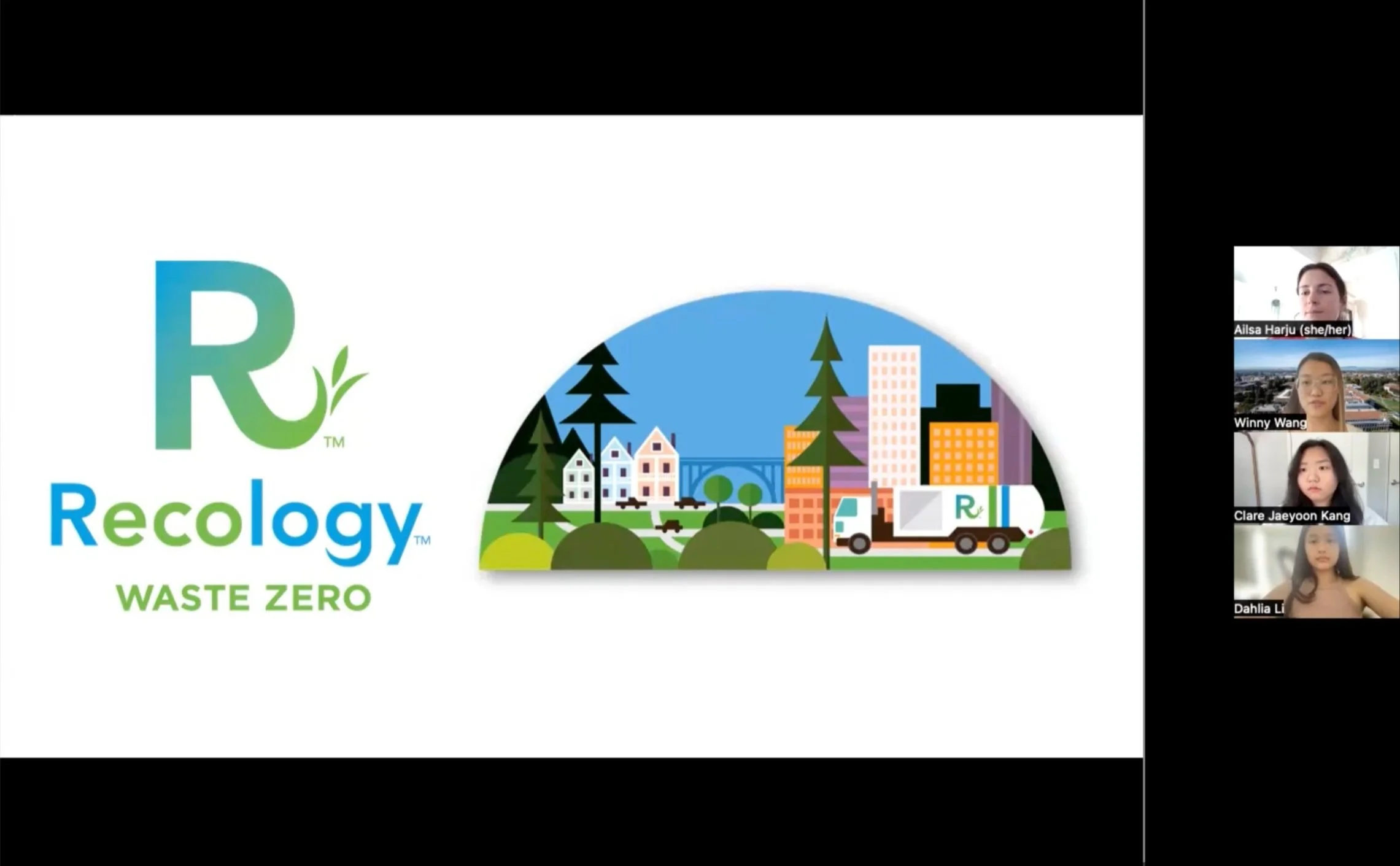
Expert Interview with Recology
Survey
Customer Behavior Study
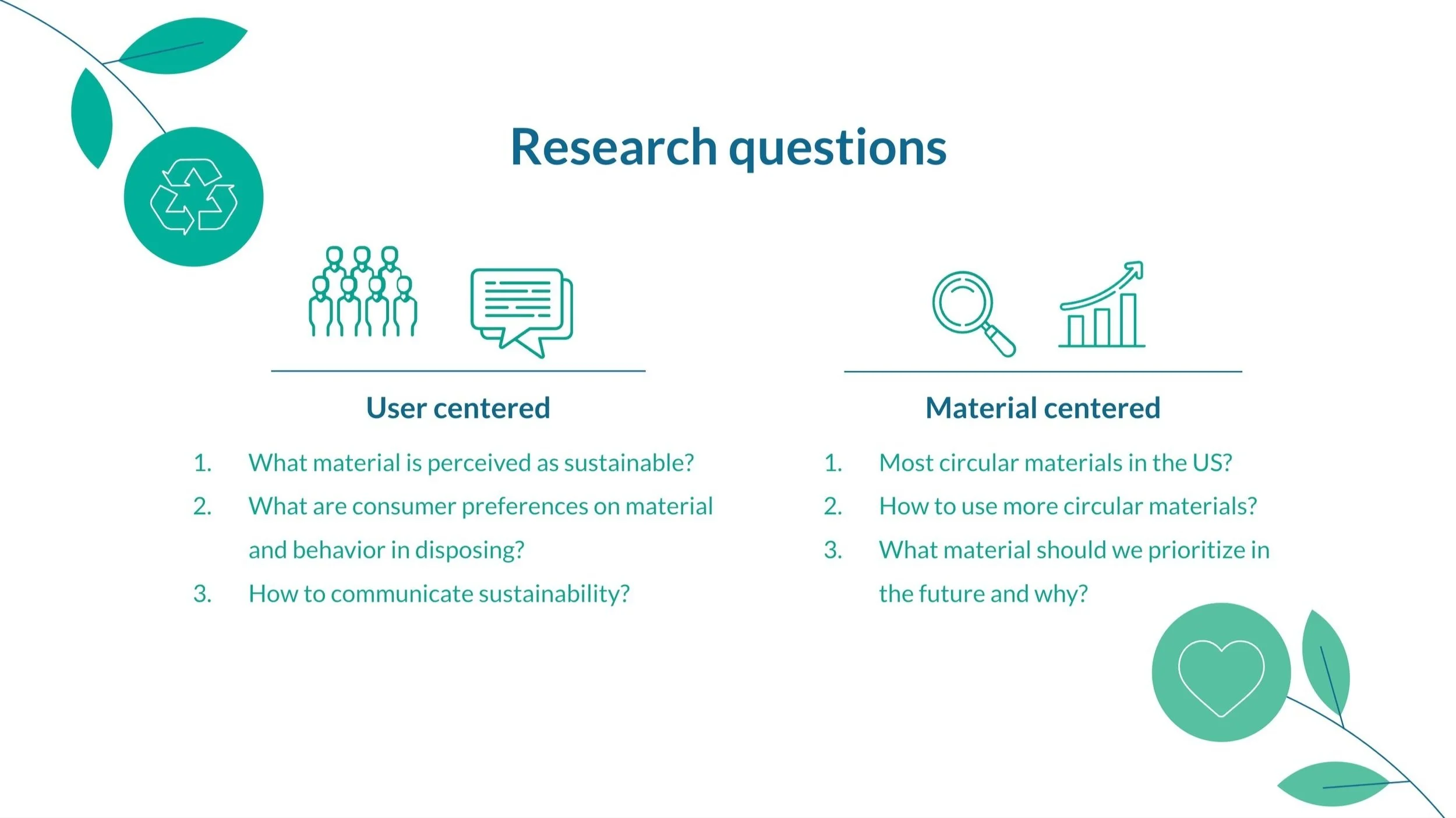
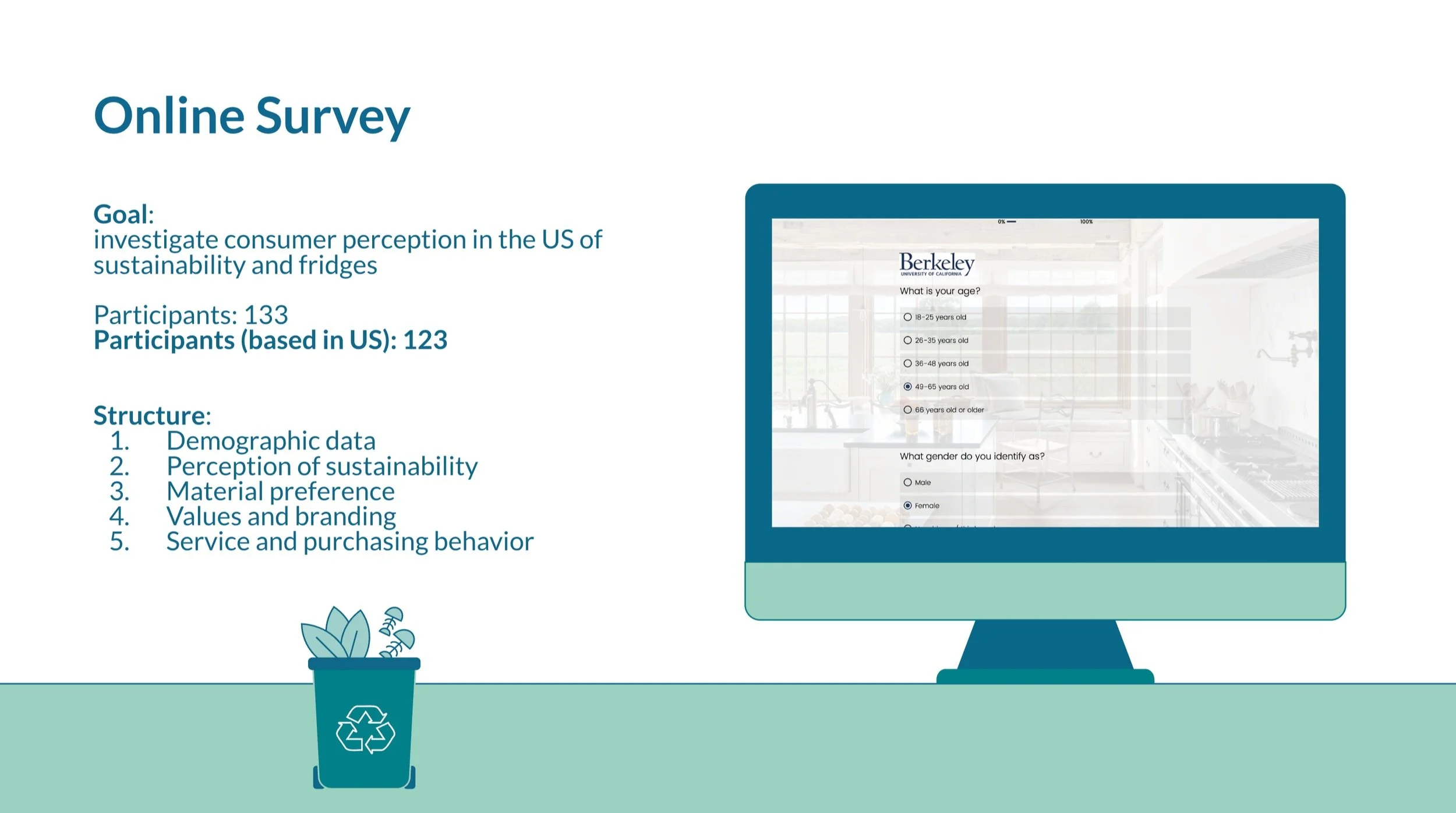
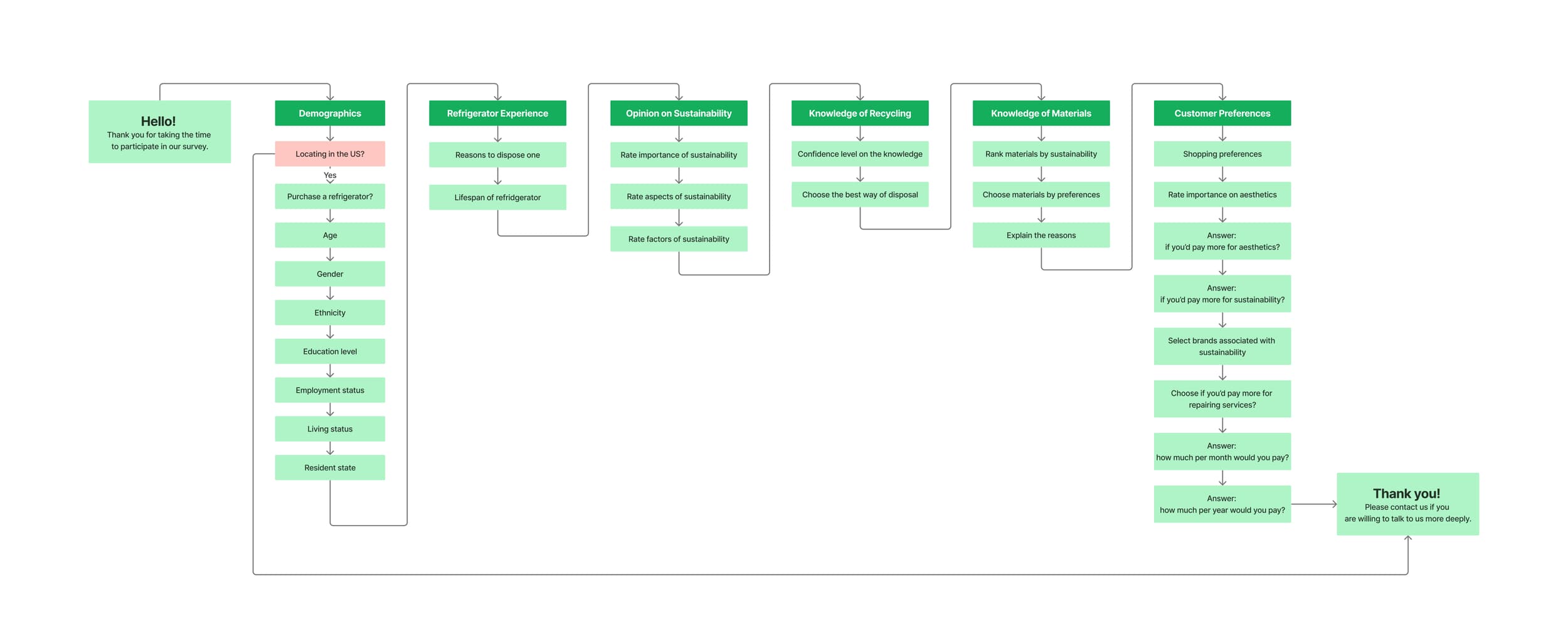
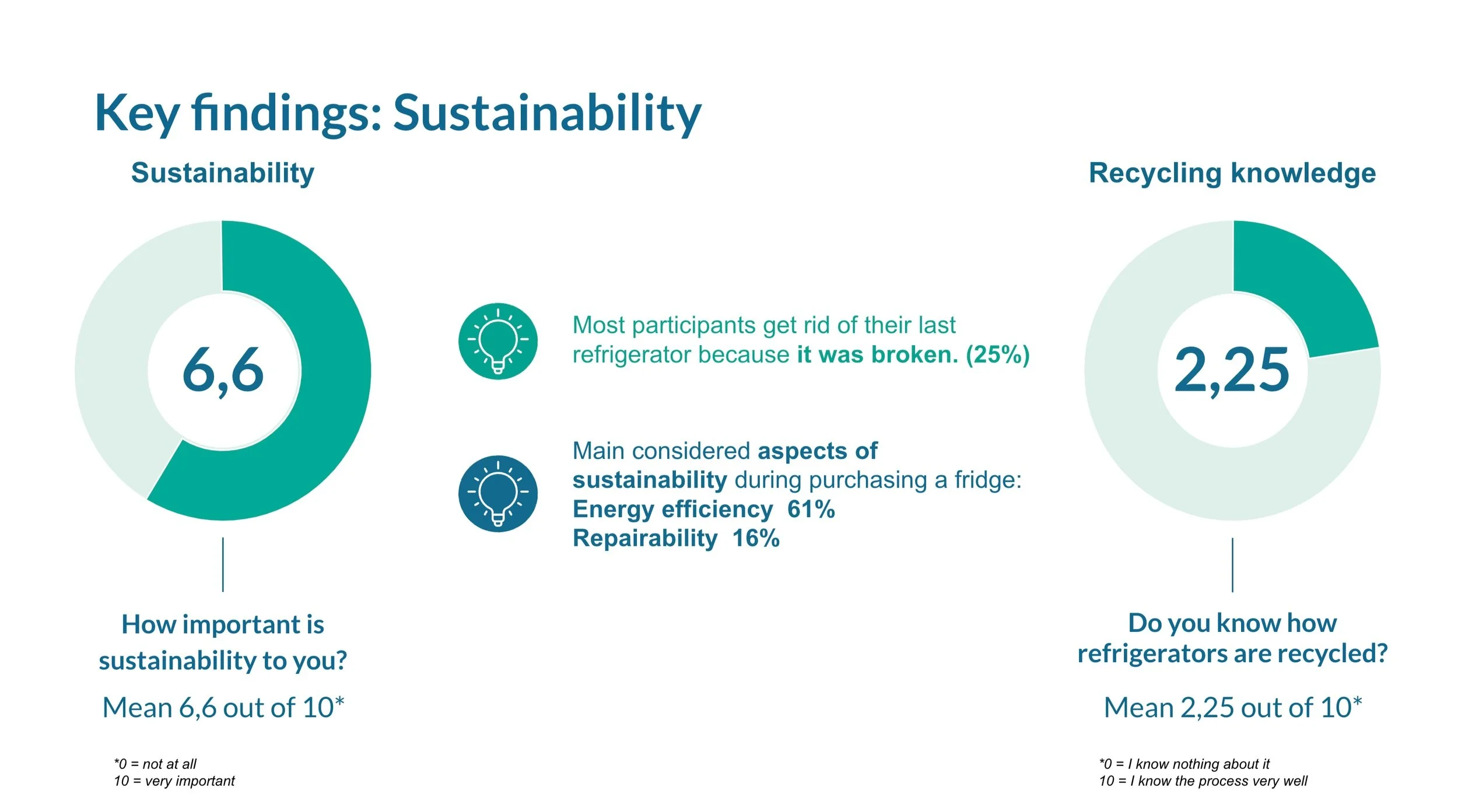
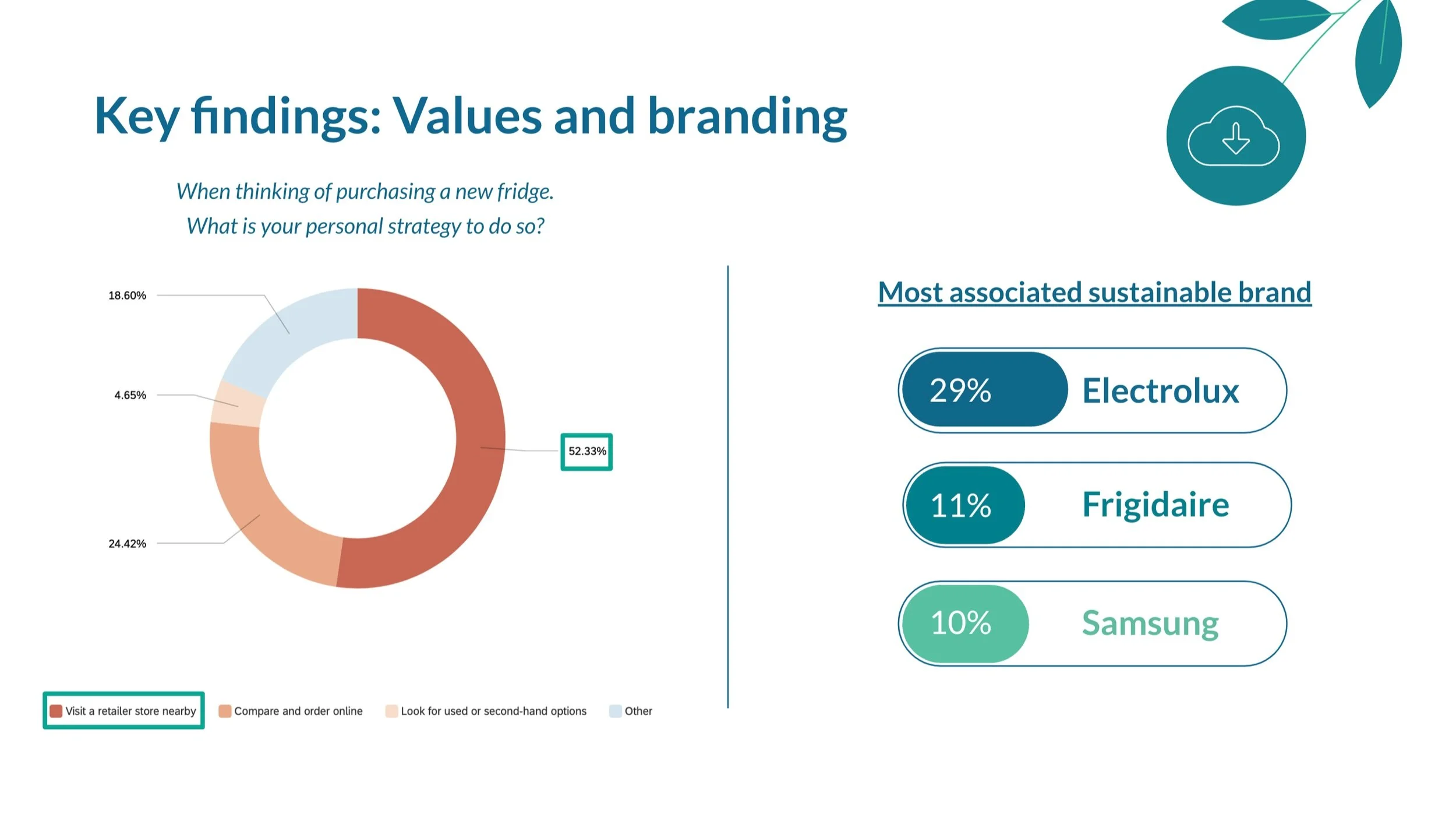
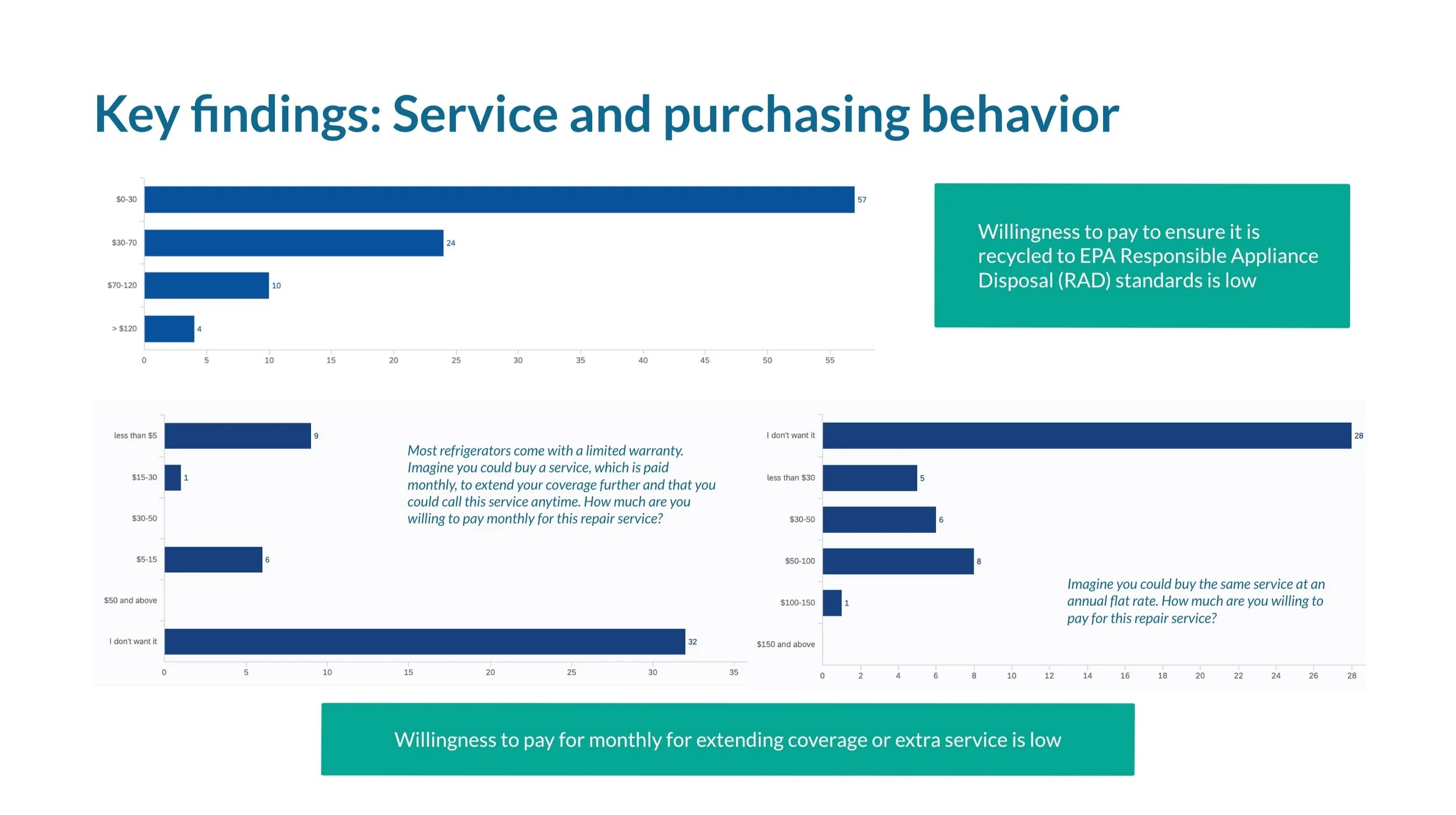
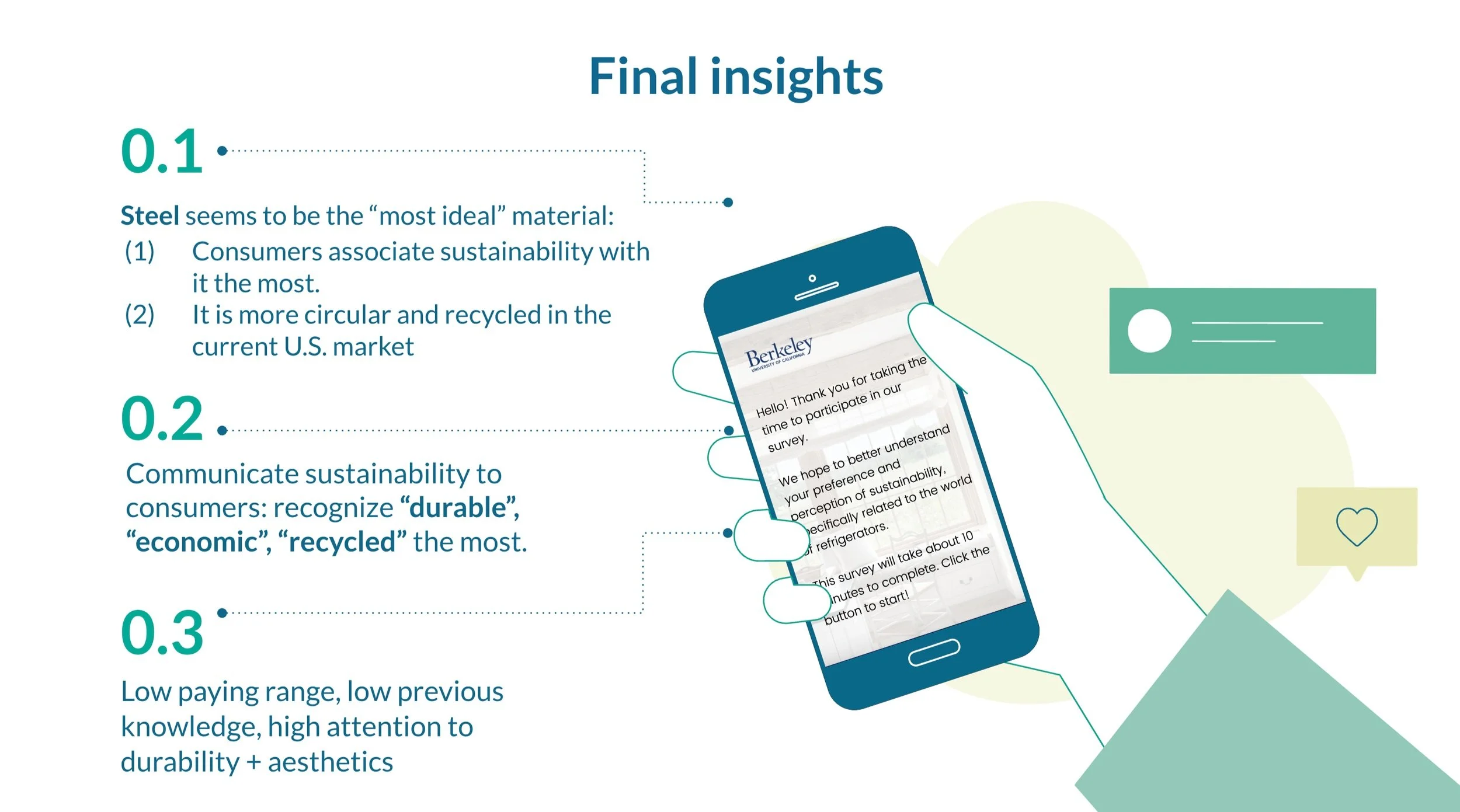
Having gained a thorough understanding of the materials, we shifted our focus to the consumer perspective, recognizing that purchasing power ultimately resides with the customers. We questioned which materials customers would prefer, what factors they consider when purchasing a refrigerator, and their interpretation of sustainability. To delve into their preferences and how these influence their purchasing decisions, we crafted a survey using Qualtrics to gather data.
Survey Structure: a combination of yes/no, open questions, ranking, rating exercises
Concept
DIY Sustainability Refrigerator
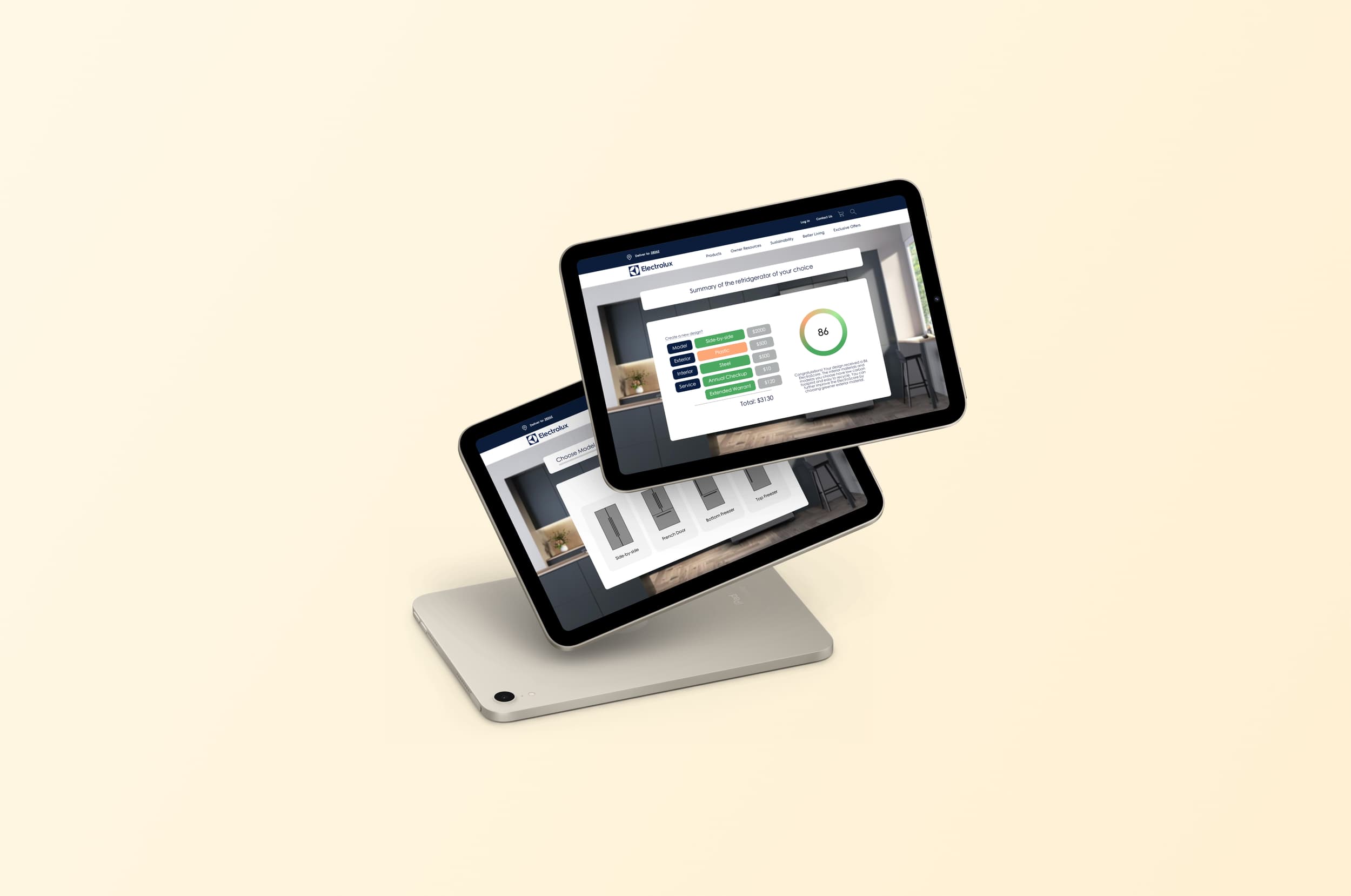
Drawing inspiration from a Samsung initiative, we developed a prototype for a "DIY Your Own Refrigerator" concept aimed at empowering Electrolux customers to enhance the sustainability of their refrigerators. This interactive design allows customers to understand the environmental impact of each choice they make. They are provided with a sustainability score based on their selections, including the model, materials, add-on services, and more, encouraging more environmentally conscious decisions.
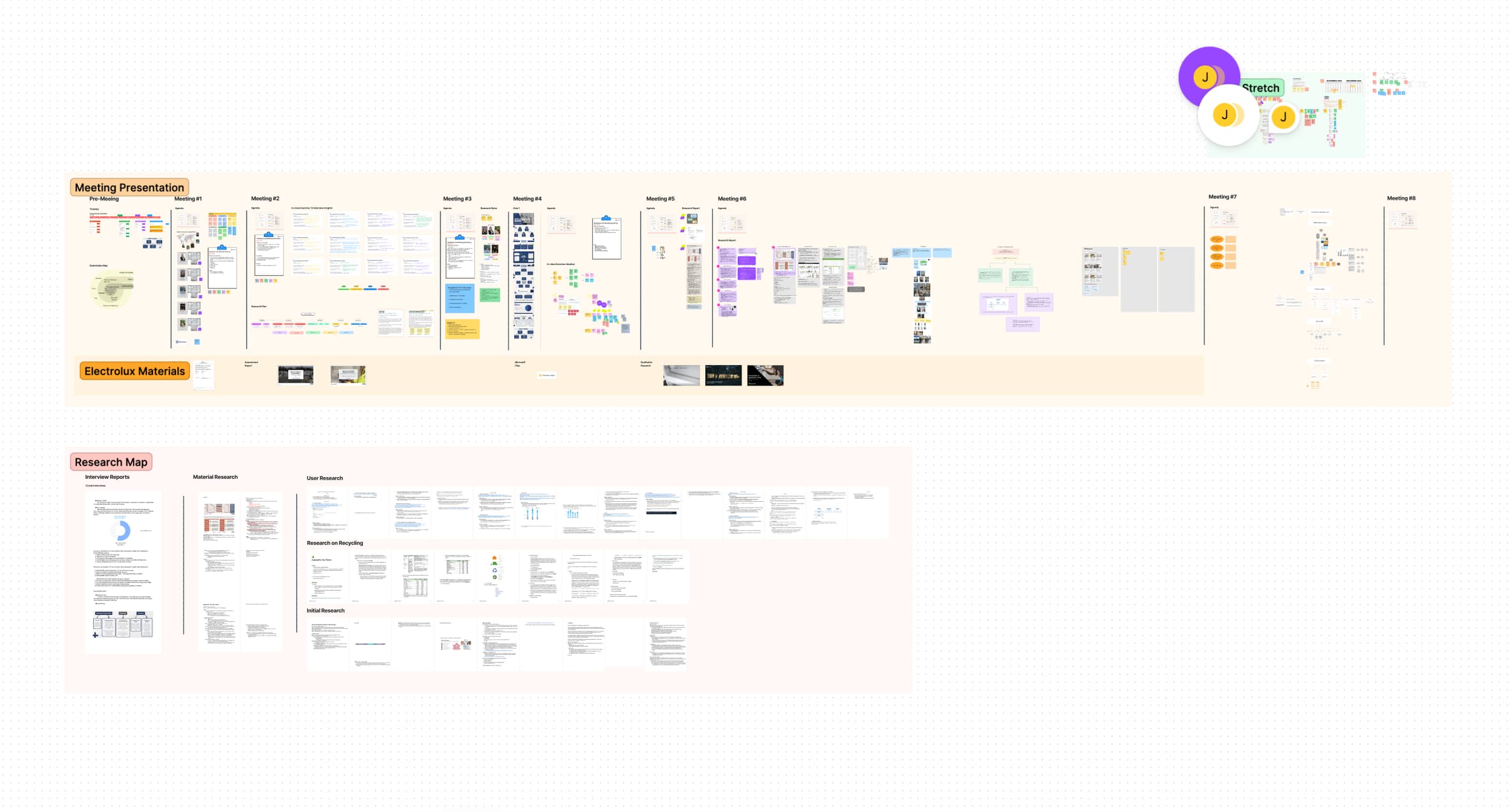
Documentation of Semester-long Research
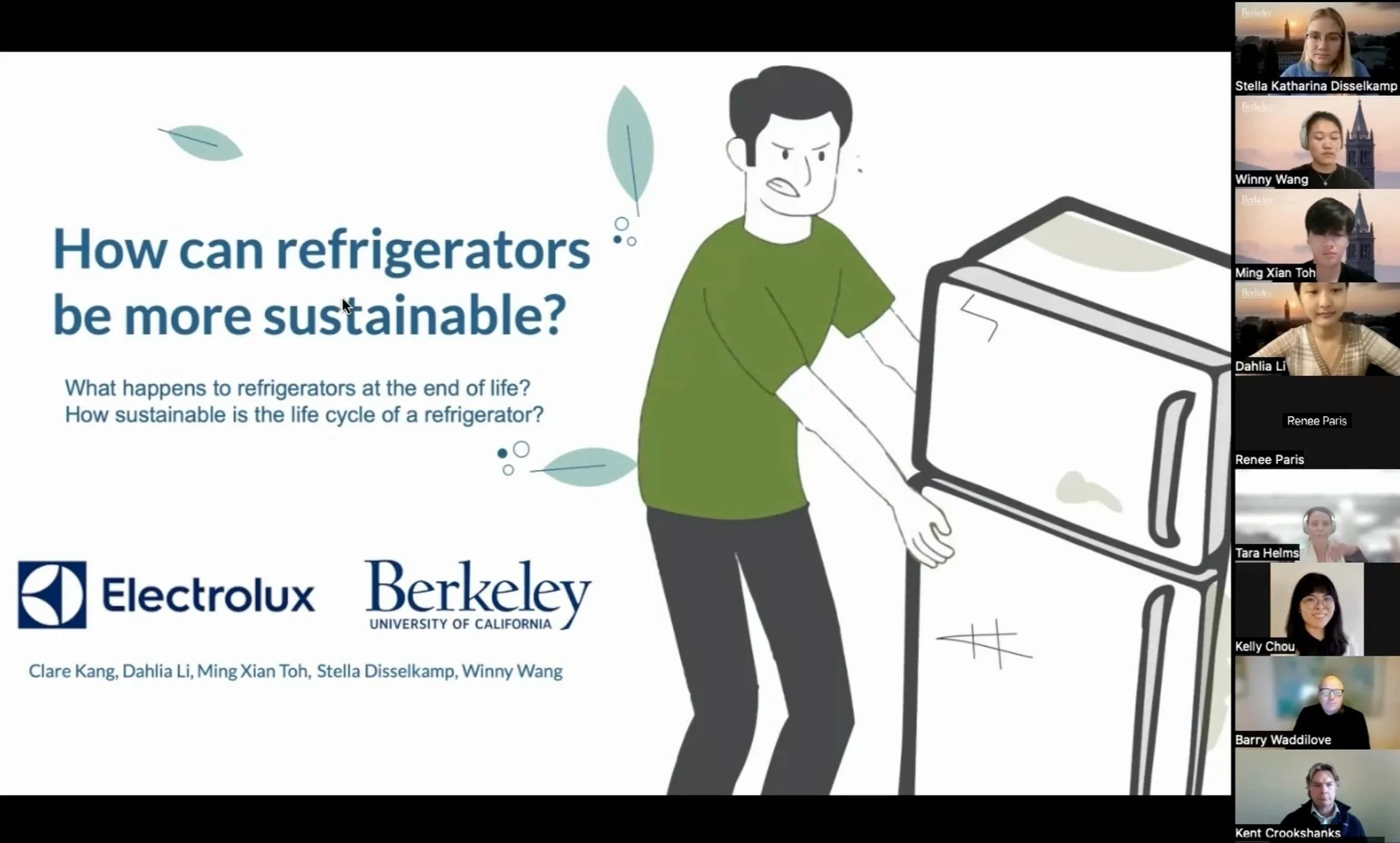
Final Presentation & Handoff to Client
Reflection
Designing for Real Impact
This project presented a significant opportunity to focus on sustainability in collaboration with a company capable of effecting real change. Designing under these conditions proved challenging, as considerations extended beyond customer preferences to encompass broader environmental implications. Consequently, our design was informed by extensive research into materials and recycling processes, ensuring that every decision contributed positively to both user satisfaction and ecological sustainability.